Personal color palette · complete guide
Find Your Personal Color Palette
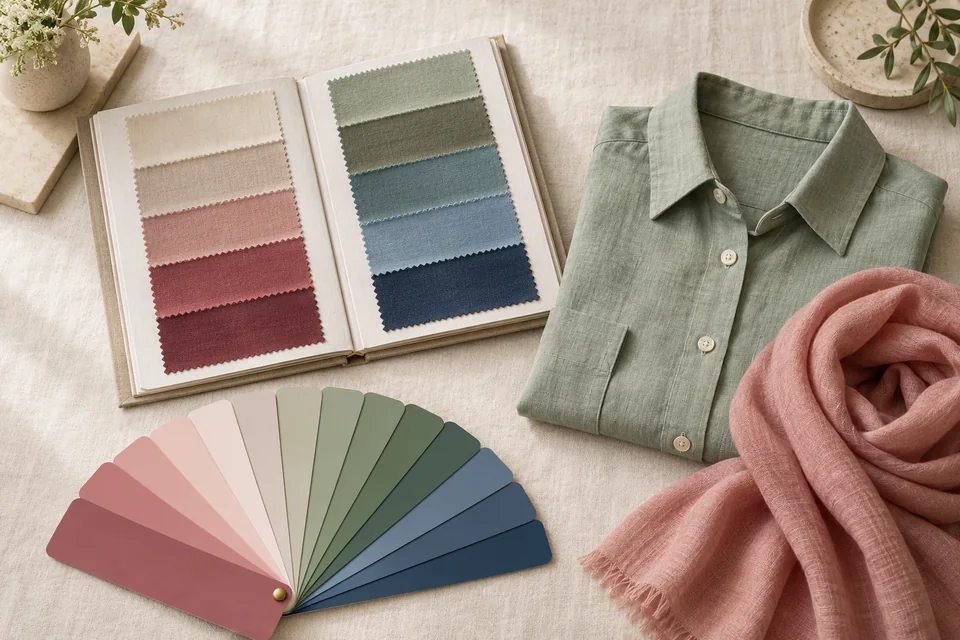
Your personal color palette is a curated set of 24 to 36 clothing, makeup and accessory shades that mirror the natural undertone (warmth), depth (light to dark) and clarity (clear vs muted) of your skin, eyes and hair. It is the practical output of color analysis: the exact reference you carry into fitting rooms and online shopping.
Below is how to identify your palette for free, how the 4-, 12- and 16-season systems compare, how to decode neutrals vs core colors vs accents, and the lighting traps that throw off most DIY tests.
- 24–36 curated HEX colors
- Neutrals · core · accents
- 4, 12 & 16-season ready
Free analysisFree account, no card
ColorAnalysis.tools Editorial TeamHow we evaluate colors
Find it
How to find your personal color palette in four steps
Most people get stuck because they guess a season name first instead of testing the three underlying color traits one by one.
1. Identify your skin undertone
Determine whether your skin leans warm (golden/peach), cool (pink/blue), neutral or olive. Start with the interactive skin undertone test and cross-check metals with the gold or silver jewelry test.
2. Measure depth and contrast
Look at the lightness or darkness of your hair, eyes and skin together. Low-contrast, blended coloring belongs to Light or Soft palettes; high-contrast hair and eyes point to Bright or Deep palettes. Use our 3-question finder on the color seasons hub.
3. Run a neutral daylight photo check
Stand facing a window on an overcast day with no filter and minimal makeup, then upload a selfie for a free AI color analysis. Compare the estimated main season and four priority shades against what you already feel great wearing.
4. Narrow to your 12-season sub-palette
Compare the three sub-season palettes inside your main season (for example Light, True and Soft Summer). Hold two signature shades from competing sub-seasons under your chin in daylight—the right palette evens out under-eye shadows and makes the whites of your eyes look clearer.
Compare systems
4-season vs 12-season vs 16-season color palettes
If two quizzes gave you different palette names, they were probably using different seasonal frameworks. The underlying three dimensions never change—only how finely the wheel is sliced.
| System | Palettes | Best for | Practical trade-off |
|---|---|---|---|
| 4-Season (Spring, Summer, Autumn, Winter) | 4 broad families | Beginners wanting fast directional rules for warm/cool and bright/muted | Too broad for neutral-warm or neutral-cool people sitting on a border |
| 12-Season (e.g., Soft Autumn, Deep Winter) | 12 sub-seasons (3 per family) | Everyday wardrobe building, makeup, hair dye and shopping with HEX codes | Best balance of precision and real-world store availability |
| 16-Season (adds Soft/Deep/Light/Warm variants) | 16 granular types | Borderline cases that feel stuck between two 12-season neighbors | Naming varies by school; see our 16-season comparison |
Read it
How to read a color palette: the 60 / 30 / 10 rule
A 24- or 36-color fan feels overwhelming until you split it into three wardrobe roles. Here is how the ratios work using Soft Autumn as an example.
Neutrals — 60% of a wardrobe
Coats, trousers, blazers, shoes and everyday bags. Every season has its own tailored neutrals—replacing stark black and optic white near the face is usually the single highest-impact upgrade.
Core colors — 30% near the face
Tops, knits, shirts and dresses worn directly below your jawline. These are the colors where staying close to your palette makes your complexion look rested even without makeup.
Accents — 10% polish & contrast
Scarves, jewelry metals, belts, handbags, nail polish and lip colors. Accents let you add energy without overwhelming your natural contrast level.
Use it
How to actually shop and dress with your palette (without replacing your closet)
Start near the face, not the whole outfit: Your palette matters most within a hand’s width of your chin—collars, scarves, necklines, earrings, makeup and hair color. Keep your existing black trousers, blue jeans or off-palette shoes and simply anchor the top half in your best shades.
Match harmony, not exact HEX pixels: Phone screens vary in brightness and warm Night Shift modes, and store LEDs cast strong yellow or green tints. Treat HEX codes as directional anchors: if a garment shares the same temperature (warm vs cool), similar lightness and similar softness as your palette swatch, it belongs.
Use the 1-1-1 outfit formula: Pair one palette neutral (bottom or jacket), one core color near the face (top or dress), and one optional accent (lip, scarf or metal). Because every shade inside a seasonal palette shares the same undertone and chroma, almost any two colors in your chart combine effortlessly.
Audit your current favorites first: Pull the five tops you get the most unprompted compliments in and lay them on your bed in daylight. Check whether they cluster in one family of our best colors for your skin tone chart—real-life compliments beat guesswork every time.
Palettes
Color analysis palettes for every season
Frequently asked questions
Short answers to the questions people ask most about this topic.
What is my color palette?
Your personal color palette is the group of 24 to 36 clothing, makeup and hair shades that match your natural undertone, depth and contrast. It usually maps to one of the 12 color seasons.
How do I find my color palette for free?
Test your skin undertone first, combine it with your natural depth and contrast on the Color Seasons finder, and upload a daylight selfie for a free AI season estimate with four starter colors.
How many colors are in a personal palette?
Most practical palettes contain 24 to 36 colors divided into roughly 60% neutrals, 30% core colors near the face, and 10% accent shades.
Do I have to wear only my palette colors?
No. Palette harmony matters most directly under your face (tops, necklines, scarves, lipstick and hair). Pants, skirts, shoes and bags are much more flexible.
Does dyeing my hair change my personal color palette?
Your skin undertone stays the same, so your core temperature does not flip. However, dramatically lightening or darkening your hair changes your contrast level, which can shift how strongly you lean toward an adjacent sister season.
What if I have olive skin and none of the warm/cool palettes fit?
Olive skin has a subtle green-yellow cast that can look warm on the surface while reacting better to neutral-cool or muted rich shades. Test Soft Autumn, Deep Autumn, Deep Winter and Soft Summer side by side in natural daylight.
Are digital HEX palettes accurate enough for shopping?
Digital swatches are great for narrowing direction and filtering online stores, especially with Night Shift/True Tone turned off. For big purchases like coats or formal dresses, always verify the fabric near your face in natural window daylight.
See which season your photo points to
Upload a clear, front-facing selfie in daylight. The free analysis estimates one of the four main seasons and shows four colors to start with.
Upload a selfieFree analysisFree account, no card