A color that suits you
- Skin looks smoother and more even.
- Under-eye shadows soften.
- Eyes look brighter and clearer.
- You look rested, even tanned — the classic "what colours make you look tan" effect.
Find your best colors
The colors that look best on you are the ones that repeat your natural coloring — the warmth or coolness of your skin, the depth of your hair and the clarity of your eyes. When a color matches those three things, people notice your face first, not your shirt.
Here is a practical way to work out what colors you should wear, without buying anything.
Free analysisNo account needed
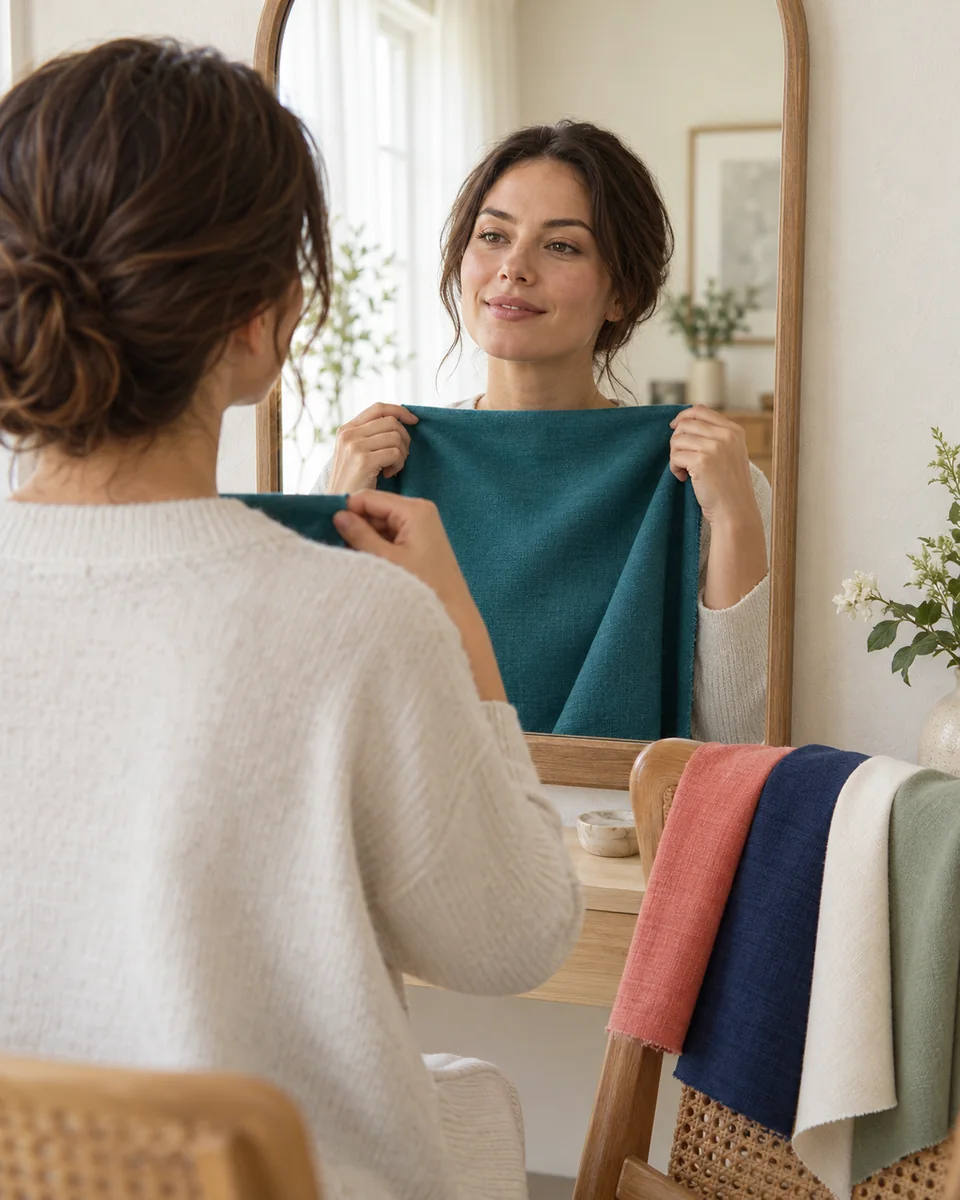
Method
Grab five or six tops or scarves in different colors and stand by a window.
Cream or pure white, gold or silver — which looks better near your face? That tells you warm or cool. Unsure? Take the undertone test.
Are your hair, eyes and skin light, medium or deep overall? Light coloring suits lighter colors; deep coloring can carry dark, rich ones.
Bright, sparkly eyes and high contrast suit clear colors. Blended, soft coloring suits muted colors.
Hold two colors under your chin one after the other. The right one evens your skin and brightens your eyes; the wrong one adds shadows, redness or a gray cast.
Warm + clear = Spring. Cool + soft = Summer. Warm + muted = Autumn. Cool + clear = Winter. Then explore your color season for a full palette.
Signs
The example colors are illustrative — which side a color falls on depends on you.
Shortcut
Photos
Best color to wear in photos: a solid, medium-depth color from your palette — navy, teal, berry, sage or a soft white — with no tiny patterns or logos. Solids keep attention on faces.
Passport, ID, license and DMV photos: the background is usually white or light gray, so avoid white and very pale colors. Navy, charcoal, a mid-blue or a jewel tone gives clean contrast. Check your country’s rules — some forbid uniforms or camouflage.
Family photos: choose a palette of three or four coordinating colors rather than matching outfits. For fall family photos, rust, olive, cream and denim are reliable; for beach photos, soft blues, white and sand.
Black and white photos: contrast matters more than color. Mix a light and a dark piece so you do not merge into the background.
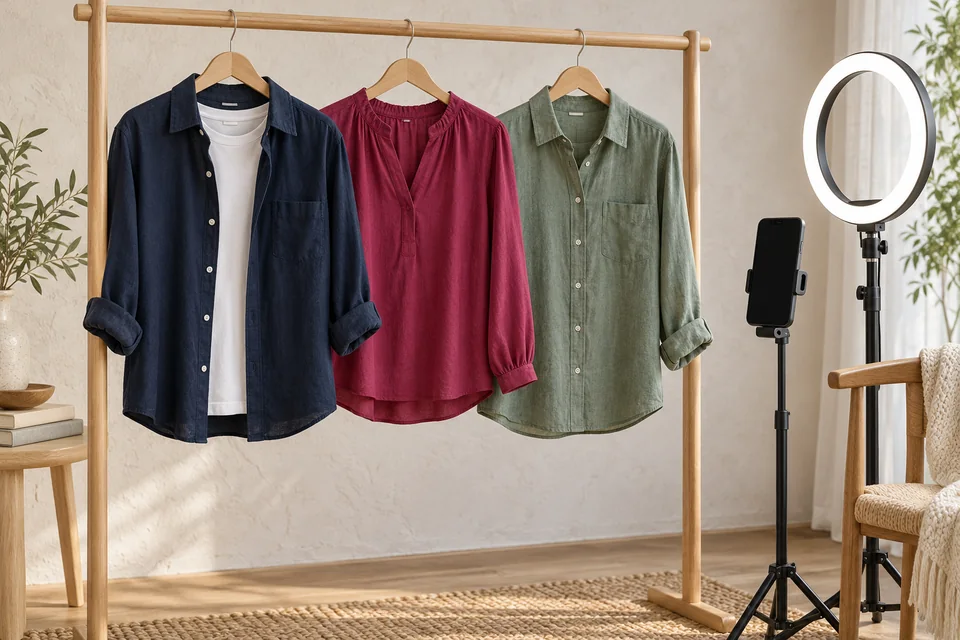
For men
The same steps work for men; the difference is where color shows up. Shirts, knitwear, ties and outerwear sit right under the face, so get those right first. Trousers and shoes matter much less.
If you are warm, swap black and gray for navy, olive, chocolate and camel. If you are cool, use charcoal, navy, blue-gray and crisp white. Stubble and beard color count as hair coloring.
Short answers to the questions people ask most about this topic.
Compare colors near your face in daylight, starting with warm vs cool, then light vs deep, then clear vs muted. The combination points to your season and palette.
Colors that repeat your undertone at a slightly deeper value: coral and warm teal for warm skin, raspberry and blue for cool skin. Very pale or neon colors usually do the opposite.
A solid medium or dark color — navy, charcoal, mid-blue or a jewel tone — that contrasts with the light background. Avoid white and pale shades.
Medium teal, soft white, true navy and a medium raspberry-red are often called "universal" colors because they sit near the middle on warmth, depth and clarity.
A photo-based analysis can give an outside estimate. Our free tool returns your likely season and four colors to try; always confirm in real light.
Upload a clear, front-facing selfie in daylight. The free analysis estimates one of the four main seasons and shows four colors to start with.
Upload a selfieFree analysisNo account needed