Color analysis explained
What Is Color Analysis?
Color analysis is a method for finding the colors that harmonize with your natural coloring — your skin, hair and eyes. The result is usually a season (Spring, Summer, Autumn or Winter, or one of 12 sub-seasons) and a palette of colors to wear near your face.
It started with fabric draping in the 1980s and today ranges from in-person sessions with a color analyst to AI analysis from a selfie. Here is how it works, what it costs and how far you can trust it.
- Since the 1980s
- Season + palette
- In person or AI
Free analysisNo account needed
The principle
How does color analysis work?
Every color has three properties: hue (warm or cool), value (light or dark) and chroma (clear or muted). Seasonal color analysis reads the same three properties in a person and matches them to colors that share them.
When a color repeats your own warmth, depth and clarity, your face looks even and your eyes look brighter. When it fights them, the color stands out and your skin can look gray, red or sallow. Color analysis is a structured way to find the first kind of color — consistently, for a whole wardrobe.
What is seasonal color analysis? It is the most common system: four seasons, each with three sub-seasons. See the color seasons guide for how they fit together.
In person
What happens when you get your colors done
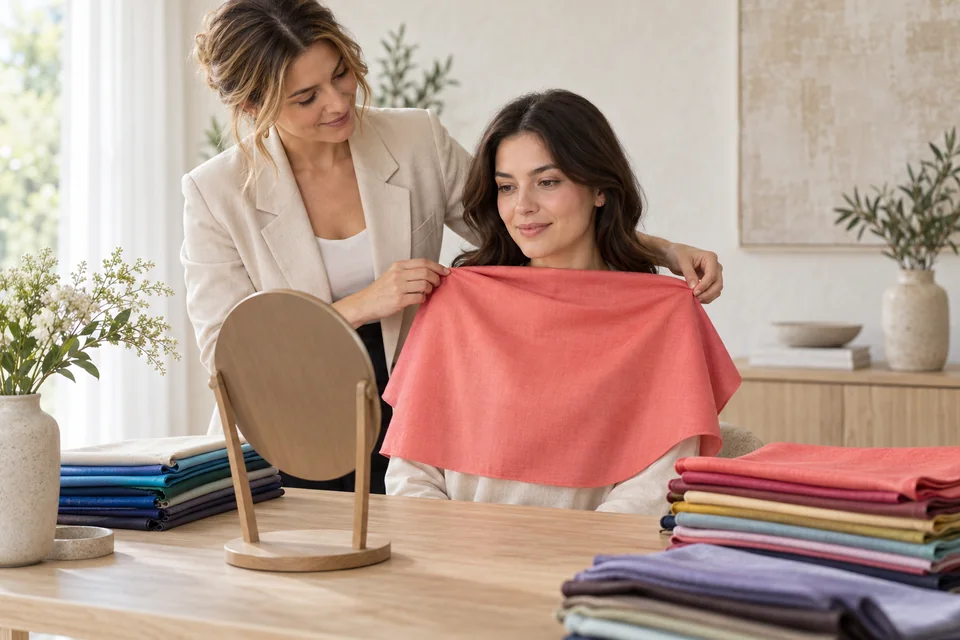
"Getting your colors done" — or "having your colors done" — usually means an in-person draping session.
Neutral setup
You sit in daylight or under daylight-balanced lamps, makeup removed, hair covered or pulled back, wearing a gray or white cape.
Warm vs cool drapes
The analyst holds warm and cool fabrics under your face and watches how your skin reacts.
Depth and clarity
Next come light vs dark and bright vs muted drapes, narrowing the family.
Season and palette
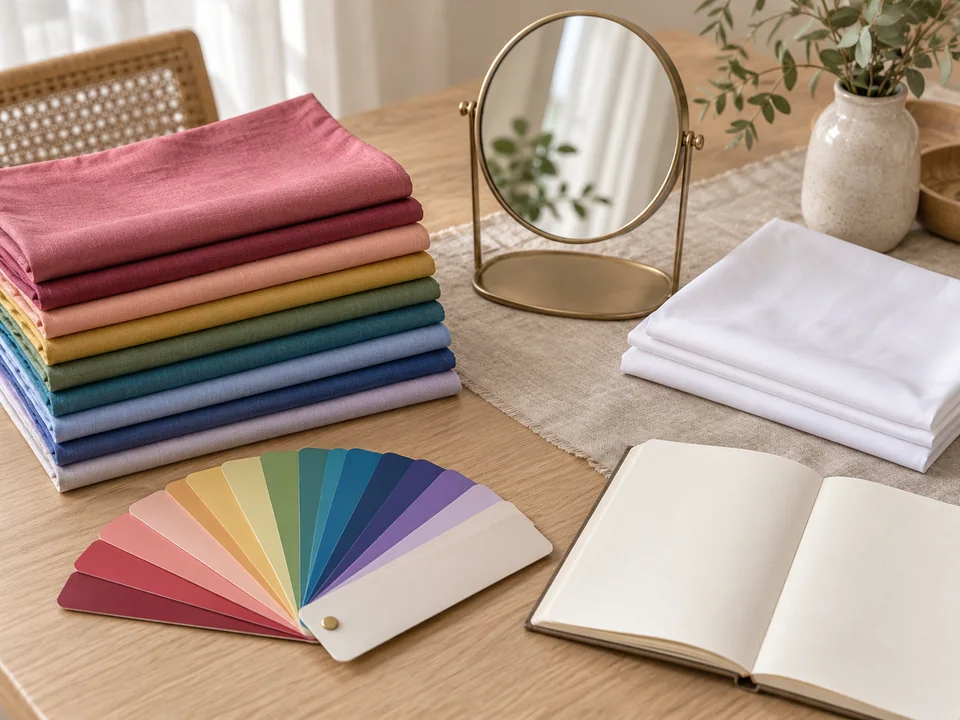
You leave with a season and usually a fabric swatch book or color fan to shop with.
Styling advice
Many sessions add makeup, hair and wardrobe advice for your season.
The expert
What is a color analyst?
A color analyst is a stylist trained to read natural coloring and assign a season. Training varies by school — some systems use 4 seasons, others 12 or 16 — so two analysts can name the same person slightly differently.
A good analyst explains why a color works, shows you side-by-side comparisons, and gives you a palette you can actually shop with.
Compare
In-person vs AI color analysis: cost and accuracy
| In-person draping | AI photo analysis | |
|---|---|---|
| Typical cost | Usually a paid appointment; prices vary widely by city and analyst | Free to low-cost; ours is free |
| Time | One to three hours plus travel | About a minute |
| What it sees | Your face under real fabrics in controlled light | Your coloring as captured by a camera |
| Main risk | Analyst’s system and judgment | Photo lighting, filters and camera processing |
| Result | Season, swatch book, styling advice | Season estimate, priority colors, outfit suggestions |
| Best for | A definitive, hands-on session | A quick, accessible starting point |
Accuracy
Is color analysis accurate? Is AI color analysis accurate?
Color analysis is a styling framework, not a lab measurement. Its value is consistency: once you know your direction, shopping and getting dressed become easier.
In-person results depend on the analyst and the lighting. AI color analysis depends on the photo: daylight, no filter and visible hair and eyes make a big difference. We publish no accuracy percentage — instead, our results include a confidence level and photo notes, and we suggest trying the colors in real light.
Other tools you will see: TikTok filters (a fun visual comparison) and ChatGPT prompts (a text opinion). Each has a place; none replaces looking at colors on your own face.
Systems
4, 12 and 16 seasons — and the Korean system
4 seasons
Spring, Summer, Autumn, Winter. The classic system and what our free tool estimates.
Read the guide12 seasons
Each season split by its dominant trait: Light, True, Bright, Soft, Deep.
Read the guide16 seasons
Adds four blended seasons; schools differ on which.
Read the guideKorean personal color
Warm/cool first, then four seasons with light and deep variants.
Read the guide
Frequently asked questions
Short answers to the questions people ask most about this topic.
What is a color analysis?
A method that matches clothing and makeup colors to your natural coloring, usually expressed as a season and a palette.
What does "getting your colors done" mean?
An in-person session where a color analyst drapes fabrics near your face to find your season and palette.
How much does color analysis cost?
In-person sessions are usually paid appointments and vary widely by location and analyst. Online and AI options range from free to low-cost.
Is AI color analysis accurate?
It can be a useful estimate when the photo is taken in daylight without filters. Lighting and camera processing are the main sources of error.
How long does color analysis take?
An in-person session typically takes one to three hours. An AI analysis takes about a minute.
Do I need to redo color analysis?
Only if your coloring changes noticeably — for example after major hair color changes or as hair turns gray.
See which season your photo points to
Upload a clear, front-facing selfie in daylight. The free analysis estimates one of the four main seasons and shows four colors to start with.
Upload a selfieFree analysisNo account needed